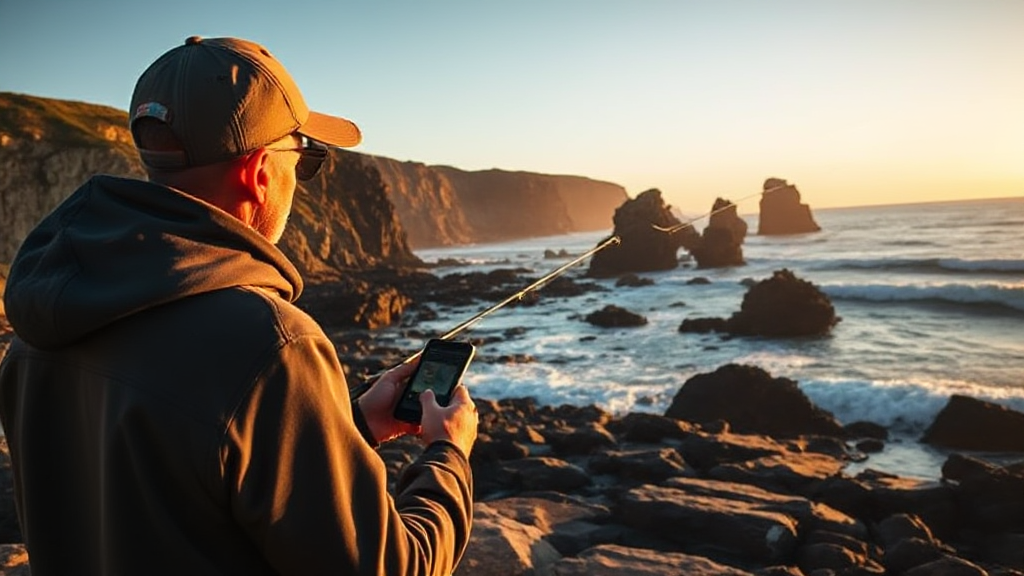
Thinking of Fishing Portugal’s Coast? What Must You Sort Out First?
Thinking of Fishing Portugal’s Coast? What Must You Sort Out First?
You have picked the town, booked the stay, maybe even checked the swell forecast. Then it hits you: is there paperwork you should have handled weeks ago? For many visiting anglers, that quiet worry is the first real obstacle to portugal fishing. The good news is that the administrative side is smaller than most people fear — provided you deal with it before you reach the water rather than after.
This is not a destination guide. It is a look at the preparation mistakes that actually cost anglers time, money or a day on the rocks, and how each one is corrected. I have compared the routes people take, from government portals to assisted applications, and the pattern is consistent: the anglers who enjoy the trip are the ones who treated the licence as a pre-departure task, not a holiday errand.
Mistake 1: Assuming You Can Sort the Licence After You Arrive
The most common error is timing. Anglers land, unpack, walk to the harbour, and only then start asking about permits. In mainland Portugal, recreational sea fishing from shore or boat requires a DGRM recreational sea fishing licence. You can be checked, and fishing without the correct licence can lead to fines that dwarf the cost of the permit itself.
The correction is simple but needs to happen early: treat the licence like your flights. Decide who needs one, confirm the dates you will be fishing, and complete the application before you travel. The official route exists, but it can involve a government portal and a NIF (Portuguese tax number) that many short-stay visitors do not have. That single requirement is where a lot of trips quietly stall.
An assisted service removes that friction. With fishing license applications handled online, you do not need a NIF and you do not have to navigate the government portal yourself. The application takes roughly three minutes, and payment works with card, Apple Pay or Google Pay. The point is not that the official system is broken — it is that the assisted route matches how visitors actually plan: from a phone, before the trip, without local paperwork.
One nuance worth stating plainly: the licence covers mainland Portugal. If your plans include the Azores or Madeira, those are separate jurisdictions with their own rules, so do not assume a mainland permit travels with you.
Mistake 2: Confusing Gear Enthusiasm With Legal Readiness
The second mistake is subtler. Anglers spend hours on rods, reels, line and lures, then treat regulations as an afterthought. On the Portuguese coast, that imbalance causes real problems.
Start with what you are actually allowed to catch and keep. Minimum sizes, daily bag limits and closed seasons apply to many species, and they vary by region and by year. A fish that is legal in one area may be undersized or protected in another. Photograph the current rules for your stretch of coast and keep them on your phone — not because anyone expects you to memorise them, but because a quick check at the water’s edge prevents an expensive misunderstanding.
Then look at where you plan to fish. Much of the Portuguese coastline is accessible, but not all of it is open to angling. Some areas fall inside marine protected zones, some are restricted near ports, and some beaches have local seasonal rules. The correction here is to pair your chosen marks with a rules check rather than picking a spot purely on how it looks from the road.
Finally, match your tackle to the setting. The Atlantic side of Portugal is not a gentle fishery. Rocky shores, exposed points and tidal movement demand gear and footwear that can handle slippery surfaces and sudden swell. Anglers who prepare their licence but not their footing are still one wave away from a bad day.
This is also where fishing in portugal rewards a little research. Knowing whether you are targeting from the shore, from a charter, or from a kayak changes what you pack, what you pay and, in some cases, what permit category applies. Decide the style of fishing first, then build the rest around it.
Mistake 3: Leaving the Details to the Last Morning
The third mistake is assuming that once the licence is sorted, everything else falls into place. In practice, the small details are what separate a smooth session from a frustrating one.
Check the sea state, not just the weather. Wind direction, swell period and tide timing matter more than air temperature on this coast, and conditions that look fine from a balcony can be unfishable at the mark. Build a buffer into your plans so a blown-out morning does not become a wasted day.
Carry your licence in a form you can actually show. A digital copy on your phone is usually fine, but battery life at a remote shore is not guaranteed. A screenshot or printed copy costs nothing and removes the risk.
Know the local etiquette. Portuguese shore anglers are generally welcoming, but space at popular marks is shared, and casting over someone else’s line is a quick way to sour a session. Arrive early, watch how the spot is being fished, and slot in rather than claiming territory.
And keep your expectations calibrated. Portugal’s coast offers a genuine variety of species and settings, from bass and bream to mackerel and beyond, but it is not a guarantee of fish. The anglers who enjoy it most are the ones who prepared properly and then relaxed into whatever the sea offered.
The pattern across all three mistakes is the same. The licence, the rules and the logistics are all front-loaded tasks. Handle them before you travel and the trip itself becomes simple: pick your mark, read the water, and fish. Leave them until you arrive and you spend your first days chasing paperwork instead of tides. Sort the preparation first, and the Portuguese coast does the rest.